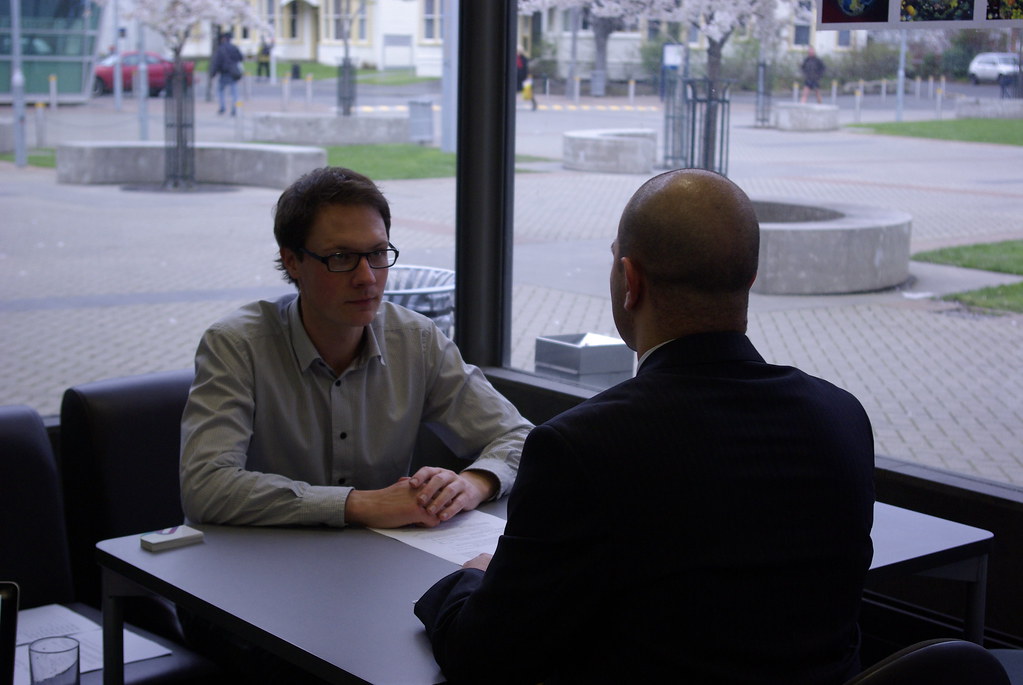
The cruel thing about interviews is that they test performance under real pressure, not just underlying ability, and those two things are genuinely not the same skill at all. You can be the single best-qualified candidate in the entire room and still stumble badly, because the very first time you ever say your "greatest weakness" answer out loud, in full, is in the actual interview room, with a stranger watching your face closely. AI gives you an endlessly patient coach to get all of that flubbing and hesitation out of the way in private first, as many times as you actually need.
Generate the questions you're actually dreading
Paste the job description and your own CV into a chat assistant and ask it to act as the interviewer for that exact specific role — ask for ten likely questions, deliberately including the awkward ones you've been avoiding thinking about, like an employment gap, a sudden career switch, or why you left your last job after only a few months.
Now you're not preparing for interviews in some vague, abstract sense; you're preparing for this specific interview, with this specific panel's likely priorities in mind, based on what the job description actually emphasises. Half of interview confidence, when you break it down, is simply having genuinely seen the question before and having a ready answer, rather than the question itself being unusually hard to answer in the abstract.
Go one step further and ask it to also generate a couple of genuinely unexpected, slightly off-script questions — the kind an interviewer asks specifically to see how you think on your feet rather than how well you've memorised a script. Preparing an honest, thoughtful approach to those matters more than nailing the predictable ones.
If you're switching fields or coming back after a career break, ask it to specifically probe that transition the way a sceptical interviewer would, rather than the way a sympathetic friend would. It's far better to be caught off guard by that question at your kitchen table on a Tuesday evening than in the actual interview on Thursday morning, when there's no time left to think it through properly.
Do this for every interview you land, even the ones that feel like a formality or a step down from what you actually want. The rehearsal habit itself is the skill you're building, not just the answers for this one specific role, and it gets noticeably faster and more natural each time you go through the process again — by your third or fourth rehearsed interview, the whole routine takes less than an hour instead of an entire evening.
Rehearse, then get specific, unflinching feedback
Type or speak your answer out loud slowly, then ask directly: "Where was that vague? What exactly would a sceptical hiring manager doubt about that particular answer? Make it noticeably tighter and more concrete, with an actual number or outcome in it." Do this two or three times per question, and the answer genuinely becomes yours in your own words — not a memorised script you'll visibly recite and lose your place in halfway through.
Ask specifically for the STAR shape on any question about your past experience — situation, task, action, result, in that order. AI is unusually good at spotting the extremely common mistake where you've described a lot of activity in detail but quietly forgotten to state the actual result, which is precisely the part every interviewer is listening for and precisely the part nervous candidates skip.
Once an answer feels solid, say it out loud one more time with your phone recording, and play it back. Hearing your own rambling or your own "um"s is uncomfortable, but it's far more useful to notice it alone in your room the night before than to notice it for the first time from the interviewer's slightly blank expression.
Drill the four that trip up almost everyone
Spend the majority of your limited prep time on these predictable, high-stakes ones rather than spreading yourself thin across every conceivable question:
- "Tell me about yourself" — a crisp, well-rehearsed sixty-second story, not your entire life history from school onward.
- "Why this company?" — one specific, genuinely researched reason tied to something real about them, not generic flattery any candidate could say about any employer.
- A gap or a career switch — one honest, forward-looking sentence you've actually rehearsed out loud, not an apology or a defensive explanation.
- "Any questions for us?" — the answer is always yes; walk in with three genuine questions ready, because asking none reads as a lack of real interest.
Practice builds the calm, not confidence tricks
The candidate who sounds calm and unhurried in the actual interview isn't fearless by nature — in almost every case, they've simply said these exact words out loud enough times before that the fear has worn off through sheer familiarity. Repetition moves an answer out of your anxious short-term memory, where it's fragile and easily scrambled by nerves, into something you can deliver smoothly while half your brain is simultaneously reading the interviewer's reactions and adjusting on the fly.
One honest caveat that matters more than any technique here: rehearse your real stories, drawn from things you actually did, not invented or heavily embellished ones. AI can genuinely help you tell the truth well, in a tighter and more compelling shape — it cannot manufacture experience you never had, and a good interviewer, the kind worth working for, will reliably find the seams if you try to fake it under a couple of good follow-up questions.
The honest goal of all this rehearsal isn't to become a smoother performer who says the right things. It's to get the nervous, first-time-saying-this-out-loud stumble out of your system in private, so the version of you that shows up on the actual day is closer to how you really think and speak when you're not panicking.
Do a final full run-through the evening before, all ten questions back to back, out loud, standing up if you can, exactly as you would in the room. It feels slightly silly to do alone in your bedroom. It works anyway, and every candidate who's actually tried it will tell you the same thing about how different the real interview felt afterward.
Interview confidence is a genuine, learnable skill, and using AI to build it properly is one of the practical, hands-on things we teach in our sessions. The Sunday Series is a low-stakes place to start practising out loud with real feedback — ₹99 a seat.
Adapted and re-angled for the Institute of Applied AI from LearnPact's career blog. Authored under the LearnPact Faculty byline.